
 English
 Español
 中文
中文 हिन्दी
 Français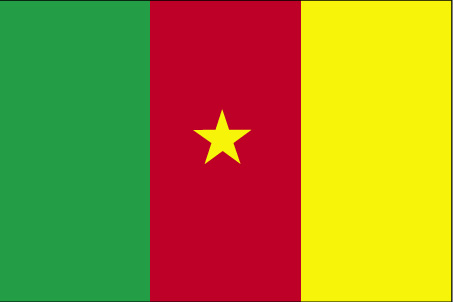
Cameroon
Declare Your Relationship to Cameroon
CountryReports Community
- Studying8
- From Cameroon4
- Cameroon heritage2
- Visited1
- Want to visit1
Customs and Culture
Customs and Culture
Cultural Attributes
Cameroon has good conditions for farming and oil is an important resource, but many Cameroonian houses are still made of mud and thatch. Many people camp out in poor areas and travel from place to place.
Music and dance play a very important role in the culture of the people of Cameroon and they have two popular traditional dances known as “makossa” and “bikutsi”. Almost every important occasion is accompanied by an appropriate song and dance. The music is more often than not transmitted orally and may be accompanied by clapping of hands or stamping of feet. In most traditional performances there will be a soloist and the rest of the community members will give back up and the accompaniments will include traditional musical instruments such as drums, talking drums, bells, horns, flutes, scrapers, rattles, whistles, and various traditional stringed instruments. Children are taught to appreciate and play these instruments from the earliest possible opportunities and this keeps the tradition moving on from one generation to the next one.

Heartbeat of Africa
Get More Customs and Culture
6 more cultural topics for members
Social Customs & Etiquette · Diet · Family · Dating Customs · Recreation · Student Life
Every country, every topic, all activities & recipes
✓ Instant access on this device · ✓ No subscription
Holidays
Republic Day
5/20Independence
(National Day)
Dates of Interest
- May 20th
How do people greet each other in Cameroon?
Greetings differ between Francophone and Anglophone areas, but men generally shake hands in both. In the south people embrace, brush cheeks and kiss the air, while in the north people use a unique handshake, snapping the other person's middle finger with their thumb.
Do
- Shake hands as a general greeting
- Say Bonjour (hello) in French-speaking areas
- Avert eye contact when greeting someone older, as a sign of respect
Don’t
- Don't look elders directly in the eye
Good to know
- The southern area is basically Francophone; the North is predominantly Anglophone
What are the dining customs in Cameroon?
Cameroonians typically eat from communal bowls using three fingers from the right hand, dipping balls of fufu into spicy sauces.
Do
- Eat using three fingers of your right hand
- Dip fufu balls into the sauces
- Use the damp towels passed out at mealtime
Good to know
- Foods are generally bland and starchy, eaten with spicy sauces
- Common dishes include meat on skewers, fried and roasted fish, curries and peppery soups
- Ndole and bobolo are typical southern dishes
What should I know about everyday etiquette in Cameroon?
Use your right hand to pass objects, and expect a culture of open hospitality where visitors and relatives may stay and be fed for long periods.
Do
- Pass objects with your right hand
Don’t
- Don't point at a person
- Don't cross your legs at the knees
Good to know
- Visitors may appear without warning
- Relatives often stay and are fed for long periods
How should I dress in Cameroon?
Women wear pagnes (cloth wraps), sometimes with a matching turban, while in urban areas people wear Western-style clothing.
Good to know
- Pagnes are cloth wraps worn by women
- Turbans are usually made from the same fabric
- In urban areas some women wear blouses over their pagnes
What gestures should I be aware of in Cameroon?
Handshakes are common, and close friends kiss on the cheek, but pointing and crossing your legs are considered rude.
Do
- Shake hands
- Kiss close friends on the cheek
Don’t
- Don't point at people
- Don't cross your legs at the knees
What is family life like in Cameroon?
Cameroonians typically have large families of five or more children, and in larger families the head of the house has more than one wife.
Good to know
- Women usually do much of the housework, including tending the fields
What do people do for recreation in Cameroon?
Soccer is the most popular sport, and music and dance are central to the culture.
Good to know
- Basketball and handball are also popular
- Makossa music is played everywhere and defines youth culture
- Traditional dances include makossa and bikutsi
- Music is often accompanied by drums, talking drums, bells, horns, flutes and other traditional instruments
Last updated: 2026-07-12 · Sources: CountryReports
Photos of Cameroon
Photos of Cameroon


Travel and Tourism
Travel and Tourism
- Travel Alert Status
- Level 2: Exercise Increased Caution
- Currency
- 605.7
- Time Difference
- UTC+1 (6 hours ahead of Washington, DC, during Standard Time)
- Airports
- 47
- Recommended Vaccinations
- How important is it to do your research about vaccinations? It might just save your life! Make yourself aware of the different types of vaccinations and which ones you may need to travel to your destination. Schedule an appointment with your doctor at least four to six weeks before you travel to ensure you receive all important shots. Be sure that you and your family are up to date on your routine vaccinations. Which vaccinations you need will depend on a number of factors including your destination, whether you will be spending time in rural areas, the season of the year you are traveling, your age, health status, and previous immunizations.
Read the full travel guide — health, safety, vaccinations, disease risk, sanitation, and transit details.
View full travel guideRecipes
Recipes
History
History
Historical Eras
Pre-colonial Era
500 BCE – 1884
Cameroon's earliest inhabitants included the Baka (Pygmies) and later Bantu-speaking peoples who migrated from the highlands. Phoenician explorer Hanno encountered Mount Cameroon around 500 BCE. From the late 18th century, the Fulani launched Islamic jihads that reshaped northern Cameroon politically and religiously, while Portuguese and later Dutch and British traders established a coastal presence largely defined by the slave trade until its suppression in the mid-19th century.
German Kamerun
1884 – 1916
Germany established a protectorate over Cameroon in July 1884, with Gustav Nachtigal signing treaties with local chiefs, and the colony was formally demarcated under the 1885 Treaty of Berlin. The colonial administration built the first railway in 1907 and developed plantation agriculture, ruling with considerable brutality. German control ended during World War I when Anglo-French forces defeated the German garrison in 1916.
British & French Mandate
1916 – 1960
Following Germany's defeat, the League of Nations mandate of 1919 partitioned Kamerun between Britain and France, with France receiving the larger eastern territory administered from Yaoundé and Britain receiving a narrow western strip governed from Lagos. France invested in infrastructure and established a French-educated elite, while also suppressing political dissent. In 1955, the Union of the Peoples of Cameroon (UPC) launched an armed uprising against French rule, a conflict that caused tens of thousands of deaths.
Independence & Federation
1960 – 1972
French Cameroon achieved independence on January 1, 1960, and in 1961 the southern portion of British Cameroon voted to join it, forming the Federal Republic of Cameroon under President Ahmadou Ahidjo. Ahidjo consolidated power by banning opposition parties in 1966 and relying on an extensive security apparatus to suppress the continuing UPC insurgency, capturing its last major leader in 1970. The federation represented a careful but unequal balance between the formerly French and British territories.
Unitary State & Ahidjo
1972 – 1982
A 1972 referendum replaced the federal structure with a centralized unitary state, renamed the Republic of Cameroon, cementing Ahidjo's authoritarian one-party rule under the Cameroon National Union. The period saw relative political stability and economic growth driven by newly discovered petroleum revenues and agricultural exports. Ahidjo unexpectedly resigned in 1982, constitutionally handing power to Prime Minister Paul Biya.
Biya Era
1982 – present
Paul Biya survived a loyalist coup attempt in 1984 and entrenched his rule under the Cameroon People's Democratic Movement (CPDM), winning successive elections of questionable credibility. Limited multiparty reforms were introduced in the 1990s under international pressure, but political power remained concentrated among a narrow ethnic oligarchy. From the late 2010s, a violent secessionist conflict in the Anglophone regions, known as the Ambazonia crisis, emerged as the country's gravest internal challenge.
Overview
The earliest inhabitants of Cameroon were probably the Bakas (Pygmies). They still inhabit the forests of the south and east provinces. Bantu speakers originating in the Cameroonian highlands were among the first groups to move out before other invaders. During the late 1770s and early 1800s, the Fulani, a pastoral Islamic people of the western Sahel, conquered most of what is now northern Cameroon, subjugating or displacing its largely non-Muslim inhabitants.
Every country, every topic, all activities & recipes
✓ Instant access on this device · ✓ No subscription
Timeline of Key Events
500 BCE
Hanno sees Mount Cameroon
The explorer Hanno from Carthage in North Africa (Tunisia) is the first foreigner who reports seeing Mount Cameroon
150 BCE
Bantu Tribes Arrive
The first Bantu-tribes arrive
1472
Fernando Po
A Portuguese expedition lead by Fernando Po are the first Europeans to reach the coast of Cameroon. They reach Douala and then sails up the Wouri River. They name the river Rio dos Camarões, the Prawn River, thus naming the country.
1520
Slave Trade
Portuguese set up sugar plantations and begin slave trade
1600
Dutch take over slave trade
The Dutch take over slave trade from the Portuguese.
1700
British Missionaries Protest Slave Trade
British missionaries protest against the slave trade
1884
German Protectorate
Gustav Nachtigal signs a treaty with the Chiefs of Doula on behalf of the German Kaiser Wilhelm. In return for trade advantages the chiefs accept a German protectorate
Read the full history profile — narrative overview, defining eras, and the complete timeline in one place.
View expanded historyInteresting Facts
Interesting Facts
When a child loses a tooth they throw their tooth over the roof and shout “Take this bad tooth and bring me new one.” Then they hop around their house on one foot and everyone laughs.
Bantu speakers were among the first groups to settle Cameroon, followed by the Muslim Fulani in the 18th and 19th centuries.
See every fact — trivia, oddities, and curious tidbits gathered from across the country.
View all interesting factsGeography and Environment
Geography and Environment
- Terrain
- diverse, with coastal plain in southwest, dissected plateau in center, mountains in west, plains in north
- Climate
- Cameroon’s climate is as varied as its geography. High humidity and temperatures with little seasonal variations characterize the coast and southern lowlands. In the north, extremely high temperatures and little or no humidity are normal, although seasonal fluctuations occur. In Yaounde, humidity and temperatures are lower, but fluctuate daily. Two rainy seasons are interspersed with two relatively dry periods. April and May bring the "mango rains." These moderately heavy rains average 8 inches monthly, then taper off into the drier months of June and July. Rainfall then increases to more than 12 inches monthly for August through November and recedes to as little as 2 inches monthly during the dry season of December through March. During the dry season temperatures may peak above 100 °F and dust is a serious problem.
- Natural Hazards
- volcanic activity with periodic releases of poisonous gases from Lake Nyos and Lake Monoun volcanoes
- Current Environmental Issues
- water-borne diseases are prevalent; deforestation; overgrazing; desertification; poaching; overfishing
Read the full geography and environment profile — terrain, climate, natural resources, hazards, land use, and international agreements.
View full geographyPeople & Demographics
People & Demographics
Religion
Languages Spoken
24 major African language groups, English (official), French (official)
- French
- English
Population
- Population
- 28,647,293
- Population in Major Urban Areas
- Douala 2.449 million; YAOUNDE (capital) 2.432 million
- Nationality Noun
- Cameroonian(s)
- Ethnic Groups
- Cameroon Highlanders 31%, Equatorial Bantu 19%, Kirdi 11%, Fulani 10%, Northwestern Bantu 8%, Eastern Nigritic 7%, other African 13%, non-African less than 1%
Education
- Literacy Definition
- Age 15 and over can read and write
Health Information
- Major Infectious Diseases — degree of risk
- Very high
Life Expectancy
- Life Expectancy at Birth
- Life expectancy at birth in Cameroon stands at approximately 60 to 61 years for the overall population, with women generally outliving men by a few years. Female life expectancy hovers around 62 to 63 years, while male life expectancy trails behind at roughly 59 to 60 years. These figures reflect meaningful improvements over past decades but remain considerably below the global average of approximately 73 years. Several interconnected factors shape these outcomes. Access to healthcare remains uneven across the country, with urban centers such as Yaoundé and Douala enjoying far better medical infrastructure than rural and remote regions. The availability of trained medical personnel, essential medicines, and functioning health facilities drops sharply outside major cities, contributing to preventable deaths. Infectious and communicable diseases continue to exert a heavy toll on the population. Malaria remains one of the leading causes of mortality, particularly among children under five. HIV/AIDS also remains a significant public health concern, with an adult prevalence rate estimated at approximately 3 percent. Tuberculosis and respiratory infections further burden an already stretched health system. Maternal and child mortality rates influence life expectancy averages substantially. Cameroon's maternal mortality ratio remains among the higher ones recorded in sub-Saharan Africa, and under-five mortality, while on a gradual downward trend, remains a critical public health challenge. Improvements in vaccination coverage, prenatal care, and skilled birth attendance have contributed to incremental gains, though progress has been uneven across regions. Nutrition, clean water access, and sanitation also play defining roles. Malnutrition affects a notable portion of children in rural areas, weakening immune systems and increasing vulnerability to disease. Limited access to potable water and inadequate sanitation infrastructure remain challenges in parts of the country, enabling the spread of waterborne illnesses such as cholera and typhoid. Ongoing instability in the Anglophone Northwest and Southwest regions has added additional strain on health systems in those areas, disrupting service delivery and displacing communities in ways that compound existing vulnerabilities. Humanitarian conditions in the Far North region, affected by conflict spillover from neighboring Nigeria, have similarly impacted health outcomes for affected populations. Despite these challenges, Cameroon has made measurable strides in improving population health over recent decades. Continued investment in primary healthcare, disease prevention programs, and maternal health services offers a credible pathway toward closing the gap with global life expectancy benchmarks.
- Infant Mortality Rate
- Cameroon's infant mortality rate remains a significant public health concern, reflecting broader challenges related to healthcare access, sanitation, and nutrition across the country. As of recent estimates, approximately 46 to 48 deaths occur per 1,000 live births in Cameroon, placing it among countries with moderate-to-high infant mortality rates in sub-Saharan Africa. The causes of infant death in Cameroon are largely preventable. Neonatal conditions — including birth asphyxia, sepsis, and complications related to prematurity — account for a substantial share of deaths in the first 28 days of life. Beyond the neonatal period, malaria, pneumonia, diarrheal diseases, and malnutrition remain leading killers of children under one year of age. Limited access to skilled birth attendants, especially in rural and forested regions, contributes to elevated risk during and immediately after delivery. There are notable regional disparities within Cameroon. The northern regions — Adamawa, North, and Far North — consistently report higher infant mortality rates compared to urban centers such as Yaoundé and Douala, where healthcare infrastructure is comparatively more developed. Poverty, low maternal education levels, and poor access to clean water and sanitation services compound mortality risks in these areas. Over the past two decades, Cameroon has made measurable progress in reducing infant mortality. Rates have declined from over 80 deaths per 1,000 live births in the early 2000s, largely due to expanded immunization programs, increased distribution of insecticide-treated bed nets to combat malaria, and improvements in antenatal care coverage. Programs supported by international health organizations have helped train community health workers and improve emergency obstetric care in underserved areas. Despite this progress, Cameroon still falls short of the targets set under the Sustainable Development Goals, which call for all countries to reduce neonatal mortality to no more than 12 deaths per 1,000 live births by 2030. Continued investment in maternal and child health services, nutrition programs, and rural healthcare infrastructure will be essential to sustaining the downward trend in infant mortality rates.
Read the full people and society profile — demographics, health, education, religion, languages, and notable people.
View full people and societyGovernment & Politics
Government & Politics
Country Identity
- Country Name
- Cameroon
- Full Country Name
- Republic of Cameroon
- Former Name
- French Cameroon
Government Structure
- Government Type
- unitary republic; multiparty presidential regime (opposition parties legalized in 1990)
- Legal System
- based on French civil law system, with common law influence; has not accepted compulsory ICJ jurisdiction
- Executive Branch
- chief of state: President Paul BIYA (since 6 November 1982) head of government: Prime Minister Joseph DION NGUTE (since 4 January 2019) cabinet: Cabinet appointed by the president from proposals submitted by the prime minister elections: president elected by popular vote for a seven-year term; election last held 7 October 2018 (next to be held in October 2025); prime minister appointed by the president election results: President Paul BIYA reelected; percent of vote - Paul BIYA 71.3%, Maurice KAMTO 14.2%, Cabral LIBII 6.3%, other candidates received smaller shares of the remaining vote
- Legislative Branch
- Cameroon has a bicameral Parliament (Parlement) consisting of two chambers. The upper chamber, the Senate (Sénat), has 100 seats, with 70 senators elected by indirect vote through regional councils and 30 appointed by the president, serving five-year terms. The lower chamber, the National Assembly (Assemblée Nationale), has 180 seats, with members elected by direct popular vote to serve five-year terms. The president retains the authority to lengthen or shorten the term of the legislature. Elections: The most recent legislative elections were held on February 9, 2020. The next elections are scheduled for 2025. Election results (National Assembly): percent of vote by party - NA; seats by party - CPDM 152, SDF 5, UNDP 3, UDC 2, other 18. The Senate, long called for under Cameroon's constitution but slow to be established, was formally created and held its first elections in 2013. It has since become a functioning component of Cameroon's legislative structure, reinforcing the bicameral nature of the Parliament.
- Judicial Branch
- Supreme Court (judges are appointed by the president); High Court of Justice (consists of nine judges and six substitute judges, elected by the National Assembly)
- Suffrage
- 20 years of age; universal
- Constitution
- 20 May 1972 approved by referendum; 2 June 1972 formally adopted; revised January 1996
- Independence
- 1 January 1960 (from French-administered UN trusteeship)
- National Holiday
- Republic Day (National Day), 20 May (1972)
Capital City
- Capital Name
- Yaounde
- Capital - geographic coordinate
- 3 52 N, 11 31 E
- Capital Time Difference
- UTC+1 (6 hours ahead of Washington, DC, during Standard Time)
founded as a German colonial settlement of Jaunde in 1888 and named after the local Yaunde (Ewondo) people
Military
Branches: Cameroon Armed Forces (Forces Armees Camerounaises, FAC), Army (L'Armee de Terre), Navy (Marine Nationale Republique (MNR), includes naval infantry), Air Force (Armee de l'Air du Cameroun, AAC), Fire Fighter Corps, Gendarmerie
Embassy / Diplomatic Mission
U.S. Embassy Yaounde
Avenue Rosa Parks in the Mbankolo Quartier, adjacent to the Mount Febe Golf Club
Mailing address: P.O. Box 817, Yaounde, Cameroon
Telephone: 237 2220-1500
Emergency after-hours telephone: 237 2220-1500
Facsimile: 237 2220-1572
Embassy Branch Office, Douala, Cameroon
Corner of Rue Ivy and Rue French in the Ecobank Building in Bonanjo
Telephone: 237 3342-5331
Facsimile: 237 3342-7790.
Read the full government profile — flag symbolism, national anthem, and other national symbols.
View full government detailsEconomy
Economy
Thanks to its oil reserves, favorable agricultural conditions, and diverse natural resources, Cameroon possesses one of the best-endowed primary commodity economies in sub-Saharan Africa.
Snapshot
- Currency Name and Code
- Cooperation Financiere en Afrique Centrale francs (XAF)
- GDP — official exchange rate
- $15,350,000,000 (USD)
- GDP Real Growth Rate
- 3.8%
- Gini Index
- 44.6
Every country, every topic, all activities & recipes
✓ Instant access on this device · ✓ No subscription
News & Weather
News & Weather
Current Weather
Latest News
Trump official central to deportation deals tapped for ambassadorship - The Washington Post
The Washington Post · 1d ago
Congo 1-1 Cameroon (29 Sep, 2026) Final Score - ESPN
ESPN · 2d ago
Trump taps deportations dealmaker as ambassador to Cameroon - The Africa Report
The Africa Report · 1d ago
Cameroon: Families demand justice as femicide rate continues to rise - africanews.com
africanews.com · 2d ago
Cameroon’s Aging President Returns From Monthslong Stay Abroad - The New York Times
The New York Times · 40d ago
Cameroon beats Malawi to win Women’s Africa Cup of Nations for the first time - France 24
France 24 · 46d ago
Gold mine hit by deadly landslide in CAR near border with Cameroon - BBC
BBC · 43d ago
Wafcon 2026 review: Glory for Cameroon, Nigeria flop and Malawi cause a stir - The Guardian
The Guardian · 43d ago
News via Google News
Videos
Videos
1 curated YouTube videos.
Source: YouTube
Frequently Asked Questions
Frequently Asked Questions
What is the population of Cameroon?
What is the capital of Cameroon?
Where is Cameroon located?
What countries border Cameroon?
What religions are practiced in Cameroon?
What is the currency of Cameroon?
What languages are spoken in Cameroon?
What is Cameroon known for?
What is the geography of Cameroon like?
Last reviewed 2026