
 English
 Español
 中文
中文 हिन्दी
 Français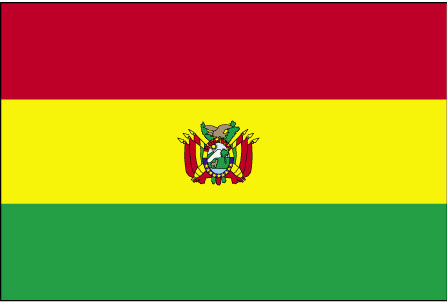
Bolivia
Bolivia
Declare Your Relationship to Bolivia
CountryReports Community
- Studying2
- From Bolivia1
- Bolivia heritage1
- Visited1
- Want to visit1
Customs and Culture
Customs and Culture
Cultural Attributes
In Bolivia, scheduled events begin late since arriving on time is not expected. Bolivians maintain little personal space and tend to stand close during conversations. In restaurants, the tip is usually included but leaving a little extra is considered polite.

Land of the Liberator's Legacy
Get More Customs and Culture
6 more cultural topics for members
Social Customs & Etiquette · Diet · Family · Dating Customs · Recreation · Student Life
Holidays
Independence Day
8/6Independence Day
Christmas
12/25Christmas
Christmas in Bolivia is a more of a religious celebration and Christmas decorations and gifts are few, Christmas trees are absent, and Nativity scenes are usually handmade.
In many villages, villagers congregate for communal meals which may feature pork, beef, fresh vegetables, and locotos (chili). More colorful festivities happen on New Year’s eve.
Dates of Interest
- December 25th
Christmas in Bolivia is more of a religious celebration and Christmas decorations and gifts are few. Christmas trees are absent and Nativity scenes are usually handmade. In many villages, villagers congregate for communal meals which may feature pork, beef, fresh vegetables, and locotos (chili). More colorful festivities happen on New Year's eve.
How do people greet and address each other in Bolivia?
For first-time introductions or when addressing a stranger such as a store owner, use the titles Señor (Mr.), Señora (Mrs.), or Señorita (Miss).
Do
- Use Señor, Señora, or Señorita for first introductions
- Maintain eye contact when speaking
Don’t
- Avoid eye contact, as it signals distrust, suspicion, or shyness
What are meals and eating customs like in Bolivia?
Lunch is generally the most important meal, often eaten at home with family and starting with soup before a main course, while breakfast and supper are lighter.
Do
- Try national dishes like salteñas (pastry pockets with meat, peas, potatoes, olives, raisins, and egg)
- Expect a mid-morning salteña break and an afternoon tea break with pastry
- Sample staples like potatoes, corn, beans, quinoa, cassava, and fried plantains
Good to know
- Breakfast is typically api (a cornmeal drink) with a cheese empanada
- Lunch breaks are long, so plan around them
- Preserved potatoes called chuños are common in rural cooking
- Enjoy treats like sweet popcorn (pasankalla), choclo, and fruits such as chirimoya
What social etiquette should travelers know in Bolivia?
Punctuality is relaxed—scheduled events start late—and people stand close during conversations with little personal space.
Do
- Expect events to begin late
- Leave a little extra even though the tip is usually included in restaurants
Don’t
- Don't expect strict punctuality
- Don't be surprised by close personal space in conversation
How do people dress in Bolivia?
Dress varies by ethnic group, social class, and location; urban Bolivians tend to wear European-style clothing while Aymara and Quechua people have distinctive traditional dress.
Good to know
- Aymara women wear bright skirts (polleras) and bowler hats
- Aymara men wear striped ponchos and ear-flap hats called chullos
- Quechua women wear long skirts and hats unique to their village
- Some Quechua and Aymara people now wear Western clothes
What gestures are important in Bolivia?
Eye contact is considered essential, and a pat on the shoulder is a friendly gesture.
Do
- Maintain eye contact
- Pat someone on the shoulder to show friendship
Don’t
- Don't avoid eye contact, as it shows distrust or shyness
What is family life like in Bolivia?
Families, especially in rural areas, often include grandparents, who help raise grandchildren when parents work, and children are taught to respect their elders.
Good to know
- Older children often watch over younger siblings
- Godparents (compadrazgo) play an important, lifelong role connecting families
What do Bolivians do for recreation?
Soccer (fútbol) is hugely popular, and Bolivians also enjoy chess, card games, and traditional games.
Good to know
- Men gather on 'Bachelor Fridays' to play cacho (dice) or sapo
- Women often play canasta or rummy
- Children play with marbles, tops (trompos), and hopscotch (coscoja/tuncuna)
- Lake Titicaca hosts an annual reed boat race and a swimming race
Last updated: 2026-07-12 · Sources: CountryReports
Photos of Bolivia
Photos of Bolivia
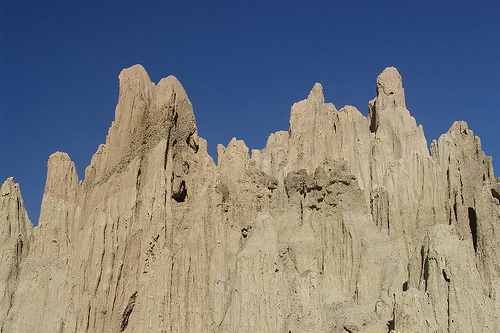
Rock formation near La Paz
Church of San Francisco in La Paz
Tiwanaku on the Bolivian Altiplano
Llamas on Isla del Sol, Lake Titicaca
Isla del Sol on Lake Titicaca
Inca ruins on Lake Titicaca
An old man and his boat
Indigenous boat
Tour buses on narrow road
How to cross a river in a bus
Crocodile near Pampas
Turtles in the Pampas River


Travel and Tourism
Travel and Tourism
- Travel Alert Status
- Level 2: Exercise Increased Caution
- Currency
- 6.91
- Time Difference
- UTC-4 (1 hour ahead of Washington, DC, during Standard Time)
- Climate
- Bolivia lies entirely within the Tropics, but extreme differences in elevation from 300 feet (90 meters) along the Brazilian border to 21,000 feet (6,400 meters) at the highest peaks produce a great variety of climatic conditions. Coupled with soil diversity, this produces highly varied vegetation, from the sparse scrub grasses in semiarid highlands to lush rain forests containing a variety of hardwoods (Mahogany, South American, Oak, and Cedar). There are two seasons in La Paz: a rainy season beginning in December and continuing through March (it rains almost daily during this period), and a dry season running from April to November. The climate is generally cool, but brilliant sunshine raises daytime temperatures. Midday outdoor parties and activities are pleasant. Rainfall averages 20 inches (51 centimeters) a year.
- Airports
- 1,067
- Recommended Vaccinations
- How important is it to do your research about vaccinations? It might just save your life! Make yourself aware of the different types of vaccinations and which ones you may need to travel to your destination. Schedule an appointment with your doctor at least four to six weeks before you travel to ensure you receive all important shots. Be sure that you and your family are up to date on your routine vaccinations. Which vaccinations you need will depend on a number of factors including your destination, whether you will be spending time in rural areas, the season of the year you are traveling, your age, health status, and previous immunizations.
Read the full travel guide — health, safety, vaccinations, disease risk, sanitation, and transit details.
View full travel guideRecipes
Recipes
History
History
Historical Eras
Pre-Columbian Era
500 BCE – 1538
The Tiwanaku civilization flourished near Lake Titicaca from roughly 500 BCE, establishing the first great Andean empire and leaving monumental ruins that endure today. The Aymara kingdoms later dominated the Altiplano before being absorbed into the expansive Inca Empire in the fifteenth century. These cultures established linguistic and agricultural traditions — including terrace farming and quinoa cultivation — that persisted long after European contact.
Spanish Colonial Rule
1538 – 1825
Spanish conquistadors subjugated the region in 1538, establishing the Audiencia of Charcas and transforming it into one of the crown's most lucrative territories through the silver mines of Potosí, the largest deposits in the Western Hemisphere. The mita system of forced indigenous labor powered extraction on an immense scale, reshaping society along rigid racial and economic hierarchies. Spain's mercantilist grip endured nearly three centuries, leaving deep imprints on Bolivia's institutions, language, and economic dependence on mineral exports.
Independence & Caudillo Era
1825 – 1879
Bolivia declared independence in 1825, named in honor of liberator Simón Bolívar, who briefly served as its first president with Antonio José de Sucre governing in practice. The early republic was defined by chronic instability, as rival caudillos orchestrated nearly constant coups and countercoups while the economy struggled to recover from the wars of independence. Indigenous tribute taxes remained the government's primary revenue source, and meaningful reform proved elusive amid factional military rivalries.
Liberal & Tin Age
1879 – 1932
The War of the Pacific (1879–1884) stripped Bolivia of its coastal Atacama territory, rendering it permanently landlocked and profoundly reshaping national identity. Defeat paradoxically ushered in greater political stability as civilian governments supplanted caudillo rule, and the rise of tin mining — dominated by Bolivian magnates such as Simón Patiño — generated substantial export wealth. The Conservative, Liberal, and Republican parties alternated power while largely serving mining interests, and modest democratization benefited the urban middle class while leaving the indigenous majority excluded.
Revolution & Military Rule
1932 – 1982
Catastrophic defeat in the Chaco War against Paraguay (1932–1935) discredited the traditional oligarchy and opened Bolivia to radical reform movements, culminating in the 1952 National Revolution led by the Nationalist Revolutionary Movement (MNR), which nationalized the tin mines, enacted universal suffrage, and redistributed land to peasants. The revolution's momentum stalled under economic mismanagement, inviting a 1964 coup by General René Barrientos and inaugurating decades of military intervention punctuated by brief civilian interludes. The period saw the US-assisted suppression of Che Guevara's guerrilla campaign in 1967 and a succession of generals — including Hugo Banzer Suárez — ruling by decree through the 1970s.
Democratic Modern Era
1982 – present
Sustained civilian democratic governance was restored in 1982 when General Torrelio's resignation allowed the return of elected government under Hernán Siles Zuazo, ending a half-century of recurring military coups. Bolivia navigated severe economic crises, hyperinflation, and contentious coca eradication programs backed by the United States throughout the 1980s and 1990s. The 2006 election of Evo Morales — the country's first indigenous president — marked a transformative shift, bringing nationalizations of natural gas resources, a new plurinational constitution in 2009, and sustained tension between indigenous movements, regional elites, and international investors.
Overview
THE HISTORY OF THE REPUBLIC OF Bolivia reflects both its pre-Columbian and its colonial heritage. The ruins of Tiahuanaco testify to the first great Andean empire. Bolivians still speak the languages of the Aymara kingdoms and of their Quechua conquerors; the society remains predominantly Indian and rural, and only a minority is monolingual in Spanish. Nevertheless, Spain also left its imprint in the political, economic, and social spheres.
Timeline of Key Events
1538
Spanish conquer Bolivia
Spanish conquer Bolivia, which becomes part of the Vice-royalty of Peru.
1825
Bolivia becomes independent with Simon Bolivar as its president.
Bolivia becomes independent with Simon Bolivar as its president.
1879 – 1984
Bolivia becomes landlocked.
Bolivia becomes landlocked after losing mineral-rich, coastal territory in the Atacama to Chile.
1903
Bolivia loses the rubber-rich province of Acre to Brazil.
Bolivia loses the rubber-rich province of Acre to Brazi.
1920
Rebellion by indigenous peoples.
Rebellion by indigenous peoples.
1932 – 1935
Bolivia loses territory to Paraguay after it is defeated in the Chaco War.
Bolivia loses territory to Paraguay after it is defeated in the Chaco War.
1952
Peasants and miners overthrow military regime
Peasants and miners overthrow military regime; Victor Paz Estenssoro returns from exile to become president and introduces social and economic reforms, including universal suffrage, nationalization of tin mines and land redistribution, and improves education and the status of indigenous peoples.
Read the full history profile — narrative overview, defining eras, and the complete timeline in one place.
View expanded historyInteresting Facts
Interesting Facts
Bolivia is named after Simón Bolivar, the great South American liberator. Bolivar led the struggle to free Bolivia and the rest of South America from Spanish colonial rule. He was also the author of Bolivia's first constitution.
Palaeontologists come to Bolivia to study its preserved dinosaur footprints. The footprints of titanosauruses, ankylosauruses and theropods have been found near Sucre.
Lake Titicaca is the highest navigable lake in the world. There are ancient ruins near the lake and on the island called Isla del Sol (Island of the Sun).
There are still Incan roads in Bolivia. These roads were built over some of the roughest terrain in the world. During Incan times, messengers called chasquis ran along these roads delivering messages across the Incan empire.
See every fact — trivia, oddities, and curious tidbits gathered from across the country.
View all interesting factsGeography and Environment
Geography and Environment
- Terrain
- rugged Andes Mountains with a highland plateau (Altiplano), hills, lowland plains of the Amazon Basin
- Climate
- Bolivia lies entirely within the Tropics, but extreme differences in elevation from 300 feet (90 meters) along the Brazilian border to 21,000 feet (6,400 meters) at the highest peaks produce a great variety of climatic conditions. Coupled with soil diversity, this produces highly varied vegetation, from the sparse scrub grasses in semiarid highlands to lush rain forests containing a variety of hardwoods (Mahogany, South American, Oak, and Cedar). There are two seasons in La Paz — a rainy season beginning in December and continuing through March (it rains almost daily during this period), and a dry season running from April to November. The climate is generally cool, but brilliant sunshine raises daytime temperatures. Midday outdoor parties and activities are pleasant. Rainfall averages 20 inches (51 centimeters) a year.
- Natural Hazards
- flooding in the northeast (March-April)
- Current Environmental Issues
- the clearing of land for agricultural purposes and the international demand for tropical timber are contributing to deforestation; soil erosion from overgrazing and poor cultivation methods (including slash-and-burn agriculture); desertification; loss of biodiversity; industrial pollution of water supplies used for drinking and irrigation
Read the full geography and environment profile — terrain, climate, natural resources, hazards, land use, and international agreements.
View full geographyPeople & Demographics
People & Demographics
Religion
Languages Spoken
Spanish (official), Quechua (official), Aymara (official)
- Aymara
- Quechua
- Spanish
Population
- Population
- 12,311,974
- Population in Major Urban Areas
- Santa Cruz 1.719 million; LA PAZ (capital) 1.715 million; Sucre (constitutional capital) 307,000
- Nationality Noun
- Bolivian(s)
- Ethnic Groups
- Quechua 30%, mestizo (mixed white and Amerindian ancestry) 30%, Aymara 25%, white 15%
Education
- Literacy Definition
- Age 15 and over can read and write
Classes usually begin at 8:00 a.m. and finish at 1:00 in the afternoon, Monday through Friday, although some schools will stop at noon for a lunch break, and then open back up from 2:00 until 5:00 p.m.
Many but not all schools require a school uniform of white shirts and pants or skirts. In secondary school, students in some schools might also need to have a separate sports uniform.
There is a wide variety of school resources in the Bolivian schools. In the poorer parts of the country, the schools lack benches, desks, and blackboards. The benches are old, and the schools are poorly maintained. In the cities, schools may have modern resources, complete with well-maintained facilities and sufficient computers for students to study technology, including Internet connectivity. A normal class size is 30 children.
Health Information
- Life Expectancy at Birth
- Life expectancy at birth in Bolivia stands at approximately 67 to 68 years for the overall population, with women living longer on average — around 70 years — compared to men, who average closer to 65 years. These figures reflect meaningful progress over recent decades but still place Bolivia below the regional average for Latin America and the Caribbean, where life expectancy generally exceeds 75 years. Several factors contribute to Bolivia's comparatively lower life expectancy. The country faces persistent challenges related to infant and child mortality, particularly in rural and indigenous communities that have limited access to healthcare facilities, clean drinking water, and proper sanitation. Altitude-related health conditions also play a role, as a large portion of the population lives on the Altiplano, a high-altitude plateau above 3,500 meters, where chronic hypoxia and cardiovascular stress can affect long-term health outcomes. Improvements in life expectancy over recent decades have been driven by expanded vaccination programs, increased prenatal care, and government initiatives aimed at reducing poverty and improving access to basic health services. Bolivia's Bono Juana Azurduy program, for instance, provided financial incentives for pregnant women and young mothers to attend regular health checkups, contributing to reductions in maternal and infant mortality rates. Noncommunicable diseases such as cardiovascular disease, diabetes, and respiratory illness now rank among the leading causes of death in Bolivia, alongside infectious diseases including respiratory infections and diarrheal illnesses, which remain more prevalent in lower-income and remote areas. Malnutrition, particularly among children under five, continues to be a contributing factor to premature mortality in certain regions. Urban residents in cities such as La Paz, Santa Cruz, and Cochabamba generally enjoy longer life expectancies than their rural counterparts, reflecting disparities in income, education, healthcare access, and infrastructure. Continued investment in public health infrastructure and poverty reduction will be central to closing this gap and improving overall longevity across the country.
- Major Infectious Diseases — degree of risk
- Very high
- Infant Mortality Rate
- Bolivia has made notable progress in reducing infant mortality over recent decades, though rates remain among the higher in South America. As of recent estimates, Bolivia's infant mortality rate stands at approximately 22 to 24 deaths per 1,000 live births, reflecting meaningful improvements from figures that exceeded 80 per 1,000 live births in the 1980s. Several interconnected factors continue to influence infant survival in Bolivia. Geographic isolation plays a significant role, as many communities in the Andean highlands and lowland Amazon regions face limited access to hospitals, trained birth attendants, and essential medicines. Rural and indigenous populations bear a disproportionate burden, with infant mortality rates in remote areas considerably higher than those recorded in urban centers such as La Paz, Santa Cruz, and Cochabamba. The leading causes of infant death include perinatal conditions such as birth asphyxia and premature birth, as well as lower respiratory infections, diarrheal diseases, and neonatal sepsis. Malnutrition and inadequate prenatal care compound these risks, particularly in the departments of Potosí and Chuquisaca, which historically report the country's highest child mortality figures. Bolivia's government has pursued a range of public health initiatives aimed at improving maternal and infant outcomes. Programs expanding access to skilled birth attendance, promoting breastfeeding, increasing vaccination coverage, and providing conditional cash transfers to low-income families have contributed to measurable declines in infant deaths. The Bono Juana Azurduy program, for example, incentivized prenatal check-ups and postnatal health visits among vulnerable mothers and newborns. Despite these advances, challenges persist. Bolivia's healthcare infrastructure remains underfunded in many areas, and disparities linked to ethnicity, income, and geography continue to shape health outcomes. International organizations including UNICEF and the World Health Organization have worked alongside the Bolivian government to strengthen primary health care services, train community health workers, and improve data collection for maternal and child health. Continued investment in rural health infrastructure, sanitation, and maternal education is considered essential to bringing Bolivia's infant mortality rate closer to regional averages seen in neighboring countries.
Life Expectancy
- Life Expectancy at Birth
- Life expectancy at birth in Bolivia stands at approximately 67 to 68 years for the overall population, with women living longer on average — around 70 years — compared to men, who average closer to 65 years. These figures reflect meaningful progress over recent decades but still place Bolivia below the regional average for Latin America and the Caribbean, where life expectancy generally exceeds 75 years. Several factors contribute to Bolivia's comparatively lower life expectancy. The country faces persistent challenges related to infant and child mortality, particularly in rural and indigenous communities that have limited access to healthcare facilities, clean drinking water, and proper sanitation. Altitude-related health conditions also play a role, as a large portion of the population lives on the Altiplano, a high-altitude plateau above 3,500 meters, where chronic hypoxia and cardiovascular stress can affect long-term health outcomes. Improvements in life expectancy over recent decades have been driven by expanded vaccination programs, increased prenatal care, and government initiatives aimed at reducing poverty and improving access to basic health services. Bolivia's Bono Juana Azurduy program, for instance, provided financial incentives for pregnant women and young mothers to attend regular health checkups, contributing to reductions in maternal and infant mortality rates. Noncommunicable diseases such as cardiovascular disease, diabetes, and respiratory illness now rank among the leading causes of death in Bolivia, alongside infectious diseases including respiratory infections and diarrheal illnesses, which remain more prevalent in lower-income and remote areas. Malnutrition, particularly among children under five, continues to be a contributing factor to premature mortality in certain regions. Urban residents in cities such as La Paz, Santa Cruz, and Cochabamba generally enjoy longer life expectancies than their rural counterparts, reflecting disparities in income, education, healthcare access, and infrastructure. Continued investment in public health infrastructure and poverty reduction will be central to closing this gap and improving overall longevity across the country.
- Infant Mortality Rate
- Bolivia has made notable progress in reducing infant mortality over recent decades, though rates remain among the higher in South America. As of recent estimates, Bolivia's infant mortality rate stands at approximately 22 to 24 deaths per 1,000 live births, reflecting meaningful improvements from figures that exceeded 80 per 1,000 live births in the 1980s. Several interconnected factors continue to influence infant survival in Bolivia. Geographic isolation plays a significant role, as many communities in the Andean highlands and lowland Amazon regions face limited access to hospitals, trained birth attendants, and essential medicines. Rural and indigenous populations bear a disproportionate burden, with infant mortality rates in remote areas considerably higher than those recorded in urban centers such as La Paz, Santa Cruz, and Cochabamba. The leading causes of infant death include perinatal conditions such as birth asphyxia and premature birth, as well as lower respiratory infections, diarrheal diseases, and neonatal sepsis. Malnutrition and inadequate prenatal care compound these risks, particularly in the departments of Potosí and Chuquisaca, which historically report the country's highest child mortality figures. Bolivia's government has pursued a range of public health initiatives aimed at improving maternal and infant outcomes. Programs expanding access to skilled birth attendance, promoting breastfeeding, increasing vaccination coverage, and providing conditional cash transfers to low-income families have contributed to measurable declines in infant deaths. The Bono Juana Azurduy program, for example, incentivized prenatal check-ups and postnatal health visits among vulnerable mothers and newborns. Despite these advances, challenges persist. Bolivia's healthcare infrastructure remains underfunded in many areas, and disparities linked to ethnicity, income, and geography continue to shape health outcomes. International organizations including UNICEF and the World Health Organization have worked alongside the Bolivian government to strengthen primary health care services, train community health workers, and improve data collection for maternal and child health. Continued investment in rural health infrastructure, sanitation, and maternal education is considered essential to bringing Bolivia's infant mortality rate closer to regional averages seen in neighboring countries.
Read the full people and society profile — demographics, health, education, religion, languages, and notable people.
View full people and societyGovernment & Politics
Government & Politics
Country Identity
- Country Name
- Bolivia
- Full Country Name
- Republic of Bolivia
- Local - Long
- Republica de Bolivia
- Local - Short
- Bolivia
Government Structure
- Government Type
- republic
- Legal System
- based on Spanish law and Napoleonic Code; has not accepted compulsory ICJ jurisdiction
- Executive Branch
- chief of state: President Luis Alberto ARCE Catacora (since 8 November 2020); Vice President David CHOQUEHUANCA Cespedes (since 8 November 2020); note - the president is both chief of state and head of government head of government: President Luis Alberto ARCE Catacora (since 8 November 2020); Vice President David CHOQUEHUANCA Cespedes (since 8 November 2020); note - the president is both chief of state and head of government cabinet: Cabinet appointed by the president elections: president and vice president elected on the same ticket by popular vote for five-year terms; election last held on 18 October 2020 (next to be held in 2025) election results: Luis Alberto ARCE Catacora elected president; percent of vote - Luis Alberto ARCE Catacora (MAS) 55.1%; Carlos Diego MESA Gisbert (CC) 28.8%; Luis Fernando CAMACHO Vaca (Creemos) 14.0%; other 2.1%
- Legislative Branch
- Bicameral Plurinational Legislative Assembly or Asamblea Legislativa Plurinacional consists of the Chamber of Senators or Cámara de Senadores (36 seats; members are elected by proportional representation from party lists to serve five-year terms) and the Chamber of Deputies or Cámara de Diputados (130 seats; 70 are directly elected from single-member districts and 60 are elected by proportional representation from party lists, with 7 seats reserved for indigenous minority representatives; members serve five-year terms). Elections: Chamber of Senators and Chamber of Deputies — last held on 18 October 2020 (next to be held in 2025). Election results: Chamber of Senators — percent of vote by party — MAS-IPSP 55.1%, CC 28.8%, Creemos 14.0%; seats by party — MAS-IPSP 21, CC 11, Creemos 4. Chamber of Deputies — percent of vote by party — MAS-IPSP 55.1%, CC 28.8%, Creemos 14.0%; seats by party — MAS-IPSP 75, CC 39, Creemos 16. Note: The body was renamed and restructured under Bolivia's 2009 constitution, which replaced the former National Congress with the current Plurinational Legislative Assembly, reflecting the country's reconstitution as a plurinational state.
- Judicial Branch
- Supreme Court or Corte Suprema (judges appointed for 10-year terms by National Congress); District Courts (one in each department); provincial and local courts (to try minor cases)
- Suffrage
- 18 years of age, universal and compulsory (married); 21 years of age, universal and compulsory (single)
- Constitution
- 2 February 1967; revised in August 1994
- Independence
- 6 August 1825 (from Spain)
- National Holiday
- Independence Day, 6 August (1825)
Capital City
- Capital Name
- La Paz (administrative capital); Sucre (constitutional [legislative and judicial] capital)
- Capital - geographic coordinate
- 16 30 S, 68 09 W
- Capital Time Difference
- UTC-4 (1 hour ahead of Washington, DC, during Standard Time)
La Paz is a shortening of the original name of the city, Nuestra Senora de La Paz (Our Lady of Peace); Sucre is named after Antonio Jose de SUCRE (1795-1830), military hero in the independence struggle from Spain and the second president of Bolivia
note: at approximately 3,630 m above sea level, La Paz's elevation makes it the highest capital city in the world
Military
Branches: Bolivian Armed Forces: Bolivian Army (Ejercito Boliviano, EB), Bolivian Naval Force (Fuerza Naval Boliviana, FNB; includes Marines), Bolivian Air Force (Fuerza Aerea Boliviana, FAB)
Embassy / Diplomatic Mission
U.S. Embassy La Paz
Avenida Arce 2780, La Paz, Bolivia
Telephone: 591-2-216-8246
After Hours Emergency Number:591-216-8000
Facsimile: 591-2-216-8808
ConsularLaPazACS@state.gov
There are two Consular Agencies in Bolivia that provide limited services to U.S. citizens, including accepting passport applications which are then processed in La Paz. To request routine services at one of the Consular Agencies, please schedule an appointment through the Embassy's web page.
U.S. Consular Agency Santa Cruz
Avenida Roque Aguilera #146 (3er Anillo), Santa Cruz, Bolivia
Telephone: 591-3-351-3477 / 351-3479
Facsimile: 591-3-351-3478
U.S. Consular Agency Cochabamba
Edificio "SAAL", Avenida Pando No. 1122, Piso 1, Suites B and C, Cochabamba, Bolivia
Telephone: 591-4-411-6313
Facsimile: 591-4- 448-9119
Read the full government profile — flag symbolism, national anthem, and other national symbols.
View full government detailsEconomy
Economy
Bolivia, long one of the poorest and least developed countries in Latin America, has undergone significant economic transformation over recent decades.
Snapshot
- Currency Name and Code
- Bolivianos (BOB)
- GDP — official exchange rate
- $9,657,000,000 (USD)
- GDP Real Growth Rate
- 2.3%
- Gini Index
- 60.6
News & Weather
News & Weather
Current Weather
Latest News
Bolivia’s Lithium Isn’t a Gold Mine - Foreign Policy
Foreign Policy · 1d ago
A bruising week for Bolivia’s President Paz as scandal and setbacks test his presidency - AP News
AP News · 8h ago
Bolivia ousts economy minister after lawmaker pressure, in blow to Paz - Reuters
Reuters · 17h ago
Adviser to far-right Latin American leaders arrested for allegedly plotting to kill girlfriend - The Guardian
The Guardian · 2d ago
Researchers probe why 2 Indigenous groups in Bolivia had lowest COVID death rates in world - CIDRAP
CIDRAP · 1d ago
Bolivia’s President Rodrigo Paz fires economy minister amid unrest - Al Jazeera
Al Jazeera · 13h ago
Travel advisory: Visitors to South American destination urged to ‘exercise increased caution’ - NJ.com
NJ.com · 2d ago
Bolivia Replaces Finance Minister After Congressional Censure - Bloomberg.com
Bloomberg.com · 18h ago
News via Google News
Climate Overview
Bolivia lies entirely within the Tropics, but extreme differences in elevation from 300 feet (90 meters) along the Brazilian border to 21,000 feet (6,400 meters) at the highest peaks produce a great variety of climatic conditions. Coupled with soil diversity, this produces highly varied vegetation, from the sparse scrub grasses in semiarid highlands to lush rain forests containing a variety of hardwoods (Mahogany, South American, Oak, and Cedar). There are two seasons in La Paz: a rainy season beginning in December and continuing through March (it rains almost daily during this period), and a dry season running from April to November. The climate is generally cool, but brilliant sunshine raises daytime temperatures. Midday outdoor parties and activities are pleasant. Rainfall averages 20 inches (51 centimeters) a year.
Videos
Videos
1 curated YouTube videos.
Source: YouTube
Frequently Asked Questions
Frequently Asked Questions
What is the population of Bolivia?
How do people greet and address each other in Bolivia?
What are meals and eating customs like in Bolivia?
What social etiquette should travelers know in Bolivia?
How do people dress in Bolivia?
What gestures are important in Bolivia?
What is family life like in Bolivia?
What do Bolivians do for recreation?
What is the capital of Bolivia?
Where is Bolivia located?
What countries border Bolivia?
What is the predominant religion in Bolivia?
What currency does Bolivia use?
What languages are spoken in Bolivia?
What is Bolivia known for?
Who was Bolivia named after?
Last reviewed 2026