
 English
 Español
 中文
中文 हिन्दी
 Français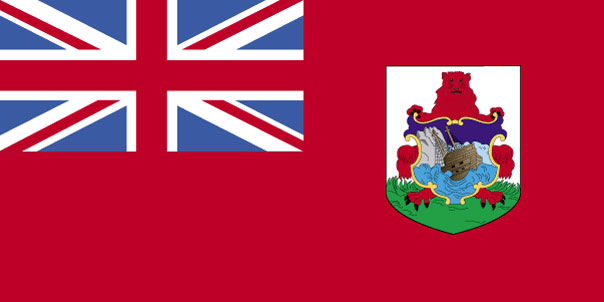
Bermuda
Declare Your Relationship to Bermuda
CountryReports Community
- Studying3
- From Bermuda1
- Bermuda heritage1
- Visited2
- Want to visit4
Customs and Culture
Customs and Culture
Cultural Attributes
Bermuda's culture is a distinctive blend of British colonial heritage and African Caribbean influences, shaped by centuries of isolation on a small Atlantic archipelago. This unique fusion is visible in everything from architecture and cuisine to social customs and annual celebrations. The island's British roots remain strong, reflected in traditions such as afternoon tea, cricket, and a parliamentary system of government that dates to 1620 — one of the oldest in the world. Bermudians drive on the left, use British spelling, and maintain a formal social culture that visitors often describe as polished and reserved compared to other Caribbean destinations. At the same time, African heritage runs deep in Bermudian identity. Approximately 54 percent of the population is of African descent, and this background profoundly shapes the island's music, food, and festive traditions. Gombey dancing is perhaps the most vivid expression of this cultural blend — a performance tradition combining West African, Native American, and British military influences through colorful costumes, drumming, and movement. Gombey troupes perform at public holidays and community events throughout the year. Bermudian cuisine reflects similar cultural layering. Traditional dishes include fish chowder seasoned with black rum and Sherry Pepper Sauce, codfish and potatoes served as a Sunday breakfast staple, and cassava pie enjoyed especially during the Christmas season. Local fish such as wahoo and rockfish are central to everyday cooking. Bermuda Day, celebrated on the last Friday of May, is one of the most important cultural events on the calendar. It marks the unofficial start of summer and features a half-marathon race, a parade through Hamilton, and the first opportunity of the year for Bermudians to wear their famous Bermuda shorts — a sartorial tradition that doubles as acceptable business attire on the island. Religion plays a notable role in daily life, with Christianity being the predominant faith. Churches of various denominations are active community centers, and Sunday observance remains culturally significant for many residents. The overall cultural identity of Bermuda is one of proud self-sufficiency, shaped by its geographic remoteness and its layered historical past.

Island of Pink Sands and Endless Spring
Get More Customs and Culture
3 more cultural topics for members
Social Customs & Etiquette · Diet · Dating Customs
Every country, every topic, all activities & recipes
✓ Instant access on this device · ✓ No subscription
Holidays
Bermuda Day
5/24Independence
Dates of Interest
- May 24th
What are the dining customs in Bermuda?
Bermudians eat European style, with dinner as the main meal typically starting with soup, followed by a meat or fish dish, and ending with dessert. Lunch is often lighter, such as a hamburger and fries or fish and chips at a pub.
Do
- Use the European style of eating
- Expect a multi-course dinner: soup, then meat or fish, then dessert
- Try local fish like wahoo and rockfish
Good to know
- Traditional dishes include fish chowder seasoned with black rum and Sherry Pepper Sauce
- Codfish and potatoes is a Sunday breakfast staple; cassava pie is popular at Christmas
- Desserts feature local fruits (loquats, guavas, bananas, cherries) with thick cream or baked in rum and brown sugar
- Pumpkin puree and papaya (pawpaw) flan are common side dishes
How should I dress in Bermuda?
Bermuda maintains a formal, polished social culture, and Bermuda shorts are a local sartorial tradition that doubles as acceptable business attire.
Do
- Consider Bermuda shorts, which are accepted even as business attire
Good to know
- The island's social culture is often described as polished and reserved compared to other Caribbean destinations
What cultural events and pastimes are important in Bermuda?
Cricket is a strong British-rooted tradition, and cultural celebrations like Bermuda Day and Gombey dancing are central to island life.
Good to know
- Bermuda Day is on the last Friday of May, marking the unofficial start of summer with a half-marathon and a parade through Hamilton
- Gombey dancing blends West African, Native American, and British military influences with colorful costumes and drumming, performed at public holidays and community events
- Afternoon tea and cricket reflect the island's British heritage
What should I know before visiting Bermuda?
Bermuda blends British colonial and African Caribbean heritage, drives on the left, uses British spelling, and observes Christianity as the predominant faith.
Do
- Remember that Bermudians drive on the left
- Respect Sunday observance, which remains culturally significant for many residents
Good to know
- Christianity is the predominant faith, and churches serve as active community centers
- Approximately 54 percent of the population is of African descent, deeply shaping music, food, and festive traditions
- The island has a parliamentary system dating to 1620, one of the oldest in the world
Last updated: 2026-07-12 · Sources: CountryReports
Photos of Bermuda
Photos of Bermuda
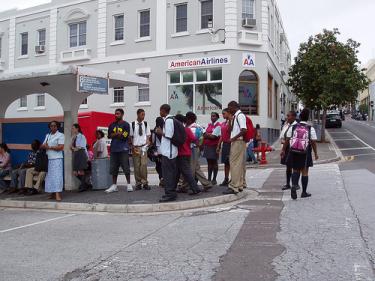
Hamilton: School children waiting for the bus
Crystal Cave
Church Building
St. Peter’s Church in St. GLooking up the front steps toward the steepleeorge
St. Peter’s Church in St. George
Hamilton: Compass arrow on City Hall / Arts Center building
St George street scene: Coat of arms for the town, "QUO FATA FERUNT"
Dinner
The entrance to St George harbor
Inside St. Peter’s Church in St. George
St George fort
St George at night


Travel and Tourism
Travel and Tourism
- Travel Alert Status
- Level 1: Exercise Normal Precautions
- Currency
- 1
- Time Difference
- UTC-4 (1 hour ahead of Washington, DC during Standard Time)
- Climate
- Though far north from tropical latitudes, Bermuda has a mild, humid, frost-free climate. The annual mean temperature is 70.2°F. Highs in summer rarely top 90°F, and lows in winter rarely drop under the 50s. The lowest temperature ever officially recorded was 44°F. The Gulf Stream, running west and north of the island, is the main reason for the good climate. The average annual rainfall is 57.6 inches, spread evenly throughout the year. The year-round high humidity, averaging more than 75%, makes some days uncomfortably sticky in summer and damp and cold in winter. January through March tends to be overcast and squally, although when the sun shines it can be like a breezy spring day. April and May are very pleasant. June through August are very hot and very humid. The heat factor (temperature plus humidity) during the hottest summer months can exceed 110°F degrees Fahrenheit. September is the stormy season, although hurricane season officially extends from June through November. Barring hurricanes, October through December are calm, mild, and usually sunny, and are considered by many to be the most pleasant part of the year. The climate, well-distributed rainfall, and heavy dew promote the luxuriant growth of vegetation of every description, despite the dearth of soil. Palms, Australian and Norfolk Island pines, mangroves, poincianas, casuarinas, ficus trees, citrus, and some tropical fruit trees grow well in Bermuda. Prolific oleander and hibiscus brighten gardens and lanes everywhere. Sadly, the famous Bermuda cedar trees that for centuries dominated the landscape and were the islands' pride, were nearly all destroyed by blight in the 1940s. The few remaining native cedars are protected, and some reforestation with blight-resistant stock is underway.
- Airports
- 1
- Recommended Vaccinations
- How important is it to do your research about vaccinations? It might just save your life! Make yourself aware of the different types of vaccinations and which ones you may need to travel to your destination. Schedule an appointment with your doctor at least four to six weeks before you travel to ensure you receive all important shots. Be sure that you and your family are up to date on your routine vaccinations. Which vaccinations you need will depend on a number of factors including your destination, whether you will be spending time in rural areas, the season of the year you are traveling, your age, health status, and previous immunizations.
Read the full travel guide — health, safety, vaccinations, disease risk, sanitation, and transit details.
View full travel guideRecipes
Recipes
History
History
Historical Eras
Discovery & Settlement
1503 – 1684
Spanish captain Juan de Bermudez sighted the uninhabited archipelago in 1503 but never landed. Permanent English settlement began after Sir George Somers's 1609 shipwreck, leading to the founding of St. George in 1612 — the oldest continuously inhabited English-speaking town in the Western Hemisphere. Representative government was introduced in 1620, making Bermuda a self-governing colony remarkably early in its history.
Crown Colony Era
1684 – 1834
Bermuda was formally reorganized as an English Crown Colony in 1684, tightening imperial control while preserving local governance. The economy depended on cedar shipbuilding, the salt trade, and the labor of enslaved Africans brought to the islands shortly after settlement. The slave trade was abolished in 1807, and Hamilton replaced St. George as the seat of government in 1815, signaling the island's commercial maturation.
Emancipation & Reform
1834 – 1968
Full emancipation of enslaved people across the British Empire in 1834 transformed Bermuda's social fabric; today roughly 55% of Bermudians are of African descent. The late Victorian period saw tourism emerge as a major industry, as wealthy North Americans sought the island's subtropical climate, supplementing a declining maritime economy. Racial segregation persisted well into the 20th century, generating significant social tension that would drive constitutional reform.
Constitutional Modernization
1968 – 1981
A new constitution introduced in 1968 greatly strengthened Bermuda's internal self-government, setting the framework for modern political life and triggering serious debate about full independence from Britain. The period was marked by racial unrest, including the 1977 riots following the execution of two men convicted of assassinating the Governor. Progressive legislative reform began reshaping the colony's civil landscape ahead of the Human Rights Act.
Rights & Offshore Finance
1981 – 2002
The Human Rights Act of 1981 formally prohibited racial discrimination, consolidating civil equality decades after emancipation. Simultaneously, Bermuda transformed its economy into one of the world's leading offshore financial and insurance centers, surpassing tourism as the primary driver of prosperity. A 1995 referendum on independence was decisively defeated, affirming the population's preference for continued ties with Britain.
British Overseas Territory
2002 – present
The British Overseas Territories Act of 2002 granted full British citizenship to Bermudians, cementing the island's constitutional relationship with the United Kingdom. International business — particularly reinsurance and financial services — has continued to dominate the economy, making Bermuda one of the wealthiest territories per capita in the world. The independence debate was reopened by the government in 2004 but remains unresolved, leaving Bermuda's long-term political status an open question.
Overview
Bermuda is an archipelago consisting of seven main islands and many smaller islands and islets lying about 1,050 kilometers (650 mi.) east of North Carolina. The main islands--with hilly terrain and subtropical climate--are clustered together, connected by bridges, and are considered to be a geographic unit, referred to as the Island of Bermuda.
Every country, every topic, all activities & recipes
✓ Instant access on this device · ✓ No subscription
Timeline of Key Events
1503
Spanish sea captain Juan de Bermudez discovers the islands.
Spanish sea captain Juan de Bermudez discovers the islands.
1684
Bermuda becomes an English crown colony.
Bermuda becomes an English crown colony.
1834
Slavery is abolished in Bermuda and the rest of the British Empire.
Slavery is abolished in Bermuda and the rest of the British Empire.
1968
New constitution introduced.
New constitution introduced. British monarch is head of state, represented by a governor. Internal self-government is granted; the governor takes responsibility for external affairs, defence, internal security and the police.
1981
Human Rights Act introduced, prohibiting racial discrimination.
Human Rights Act introduced, prohibiting racial discrimination.
2002
British Overseas Territories Act grants full British citizenship to Bermudians.
British Overseas Territories Act grants full British citizenship to Bermudians.
Read the full history profile — narrative overview, defining eras, and the complete timeline in one place.
View expanded historyInteresting Facts
Interesting Facts
Bermuda is named after Juan de Bermudez, a Spanish seafarer, who discovered the island in 1503.
Bermuda covers twenty-one square miles and consists of one hundred and eighty-one named islands and islets.
See every fact — trivia, oddities, and curious tidbits gathered from across the country.
View all interesting factsGeography and Environment
Geography and Environment
- Terrain
- low hills separated by fertile depressions
- Climate
- Though far north from tropical latitudes, Bermuda has a mild, humid, frost-free climate. The annual mean temperature is 70.2 degrees Fahrenheit. Highs in summer rarely top 90 degrees, and lows in winter rarely drop under the 50’s. The lowest temperature ever officially recorded was 44 degrees Fahrenheit. The Gulf Stream, running west and north of the island, is the main reason for the good climate. Average annual rainfall is 57.6 inches, spread evenly throughout the year. The year-round high humidity, averaging more than 75%, makes some days uncomfortably sticky in summer and damp and cold in winter. January through March tends to be overcast and squally, although when the sun shines it can be like a breezy spring day. April and May are very pleasant. June through August are very hot and very humid. The heat factor (temperature plus humidity) during the hottest summer months can exceed 110 degrees Fahrenheit. September is the stormy season, although hurricane season officially extends from June through November. Barring hurricanes, October through December are calm, mild, and usually sunny, and are considered by many to be the most pleasant part of the year. The climate, well-distributed rainfall, and heavy dew promote the luxuriant growth of vegetation of every description, despite the dearth of soil. Palms, Australian and Norfolk Island pines, mangroves, poincianas, casuarinas, and ficus trees, citrus, and some tropical fruit trees grow well in Bermuda. Prolific oleander and hibiscus brighten gardens and lanes everywhere. Sadly, the famous Bermuda cedar trees that for centuries dominated the landscape, and were the islands’ pride, were nearly all destroyed by blight in the 1940s. The few remaining native cedars are protected, and some reforestation with blight-resistant stock is underway.
- Natural Hazards
- hurricanes (June to November)
- Current Environmental Issues
- asbestos disposal; water pollution; preservation of open space; sustainable development
Read the full geography and environment profile — terrain, climate, natural resources, hazards, land use, and international agreements.
View full geographyPeople & Demographics
People & Demographics
Religion
Languages Spoken
English (official), Portuguese
- English
- Portuguese
Population
- Population
- 64,055
- Population in Major Urban Areas
- HAMILTON (capital) 11,000
- Nationality Noun
- Bermudian(s)
- Ethnic Groups
- Black 58%, white 36%, other 6%
Education
- Literacy Definition
- Age 15 and over can read and write
Life Expectancy
- Life Expectancy at Birth
- Life expectancy at birth in Bermuda ranks among the highest in the world, reflecting the island territory's advanced healthcare infrastructure, high standard of living, and stable socioeconomic conditions. The overall life expectancy for the total population sits at approximately 81 to 82 years, placing Bermuda well above the global average. Women in Bermuda tend to outlive men by a notable margin, as is common in most developed nations. Female life expectancy hovers around 84 to 85 years, while male life expectancy is generally recorded in the range of 79 to 80 years. This gender gap is consistent with broader patterns seen across high-income countries and is influenced by factors such as differences in occupational risk, health-seeking behavior, and biological predispositions. Several key factors contribute to Bermuda's strong life expectancy figures. The territory benefits from a well-developed healthcare system, with residents having access to the King Edward VII Memorial Hospital, which provides a range of modern medical services. Bermuda also maintains close ties with the United States and United Kingdom, allowing for specialized medical treatment abroad when needed. Health insurance coverage is widespread due to mandatory employer-sponsored plans established under local law. Lifestyle factors also play a role. Bermuda's population has historically engaged in outdoor physical activity, aided by a mild subtropical climate. However, like many affluent small island nations, Bermuda faces growing challenges from non-communicable diseases such as diabetes, cardiovascular disease, and obesity, which place pressure on the healthcare system and can affect long-term life expectancy trends. The territory's small population — estimated at approximately 64,000 people — means that demographic shifts and health outcomes can fluctuate more noticeably from year to year compared to larger nations. Nevertheless, sustained investment in public health initiatives and preventative care continues to support Bermuda's position as one of the longer-living populations in the Atlantic region.
- Infant Mortality Rate
- Bermuda maintains one of the lowest infant mortality rates in the Western Hemisphere, reflecting its high standard of living, well-developed healthcare infrastructure, and relatively small population. The infant mortality rate for Bermuda is estimated at approximately 2 to 3 deaths per 1,000 live births, placing it among the best-performing jurisdictions globally on this key health indicator. This figure is comparable to those of highly developed nations such as Japan, Norway, and Singapore, underscoring the quality of prenatal and postnatal care available on the island. Bermuda's single main hospital, the King Edward VII Memorial Hospital in Hamilton, serves as the primary facility for obstetric and neonatal care, offering modern medical services despite the territory's small size and geographic isolation. Several factors contribute to Bermuda's strong performance in infant health outcomes. The territory benefits from a high per capita income, which supports broad access to healthcare services for residents. Bermuda also has a well-educated population with high rates of healthcare literacy, meaning expectant mothers are more likely to seek timely prenatal care. Nutritional standards on the island are generally good, and the territory is free from many of the tropical infectious diseases that contribute to elevated infant mortality in other parts of the Caribbean and Atlantic region. It is worth noting that because Bermuda's total population is approximately 64,000, annual birth numbers are quite low — typically in the range of 700 to 800 births per year. This means that small fluctuations in the number of infant deaths can produce statistically significant shifts in the reported rate from year to year, making trend analysis more complex than for larger nations. Overall, the low infant mortality rate in Bermuda is a reliable indicator of the territory's broader public health success, reflecting effective investment in maternal health programs, accessible emergency neonatal care, and a high general standard of living across the population.
Read the full people and society profile — demographics, health, education, religion, languages, and notable people.
View full people and societyGovernment & Politics
Government & Politics
Country Identity
- Country Name
- Bermuda
- Full Country Name
- Bermuda
- Former Name
- Somers Islands
Government Structure
- Government Type
- parliamentary British overseas territory with internal self-government
- Legal System
- English law
- Executive Branch
- chief of state: King CHARLES III (since 8 September 2022), represented by Governor Rena LALGIE (since 14 December 2020) head of government: Premier David BURT (since 19 July 2017); Deputy Premier Lawrence SCOTT assists in governing while the Cabinet manages day-to-day administration cabinet: Cabinet nominated by the premier and appointed by the governor elections: none; the monarch is hereditary; the governor is appointed by the monarch; following legislative elections, the leader of the majority party or the leader of the majority coalition is usually appointed premier by the governor
- Legislative Branch
- Bicameral Parliament consists of the Senate (an 11-member body appointed by the governor, the premier, and the opposition) and the House of Assembly (36 seats; members are elected by popular vote to serve up to five-year terms). Elections: The most recent general election was held on 1 October 2020. The next election is required to be held no later than 2025. Election results: Percent of vote by party — PLP 62.1%, OBA 31.9%; seats by party — PLP 30, OBA 6.
- Judicial Branch
- Supreme Court; Court of Appeal; Magistrate Courts
- Suffrage
- 18 years of age; universal
- Constitution
- 8 June 1968, amended 1989 and 2003
- Independence
- none (overseas territory of the UK)
- National Holiday
- Bermuda Day, 24 May
Capital City
- Capital Name
- Hamilton
- Capital - geographic coordinate
- 32 17 N, 64 47 W
- Capital Time Difference
- UTC-4 (1 hour ahead of Washington, DC during Standard Time)
named after Henry HAMILTON (ca. 1734-1796) who served as governor of Bermuda from 1788-1794
Military
Branches: Bermuda Regiment
Embassy / Diplomatic Mission
American Consulate General Hamilton
16 Middle Road
Devonshire DV 03
Telephone: (441) 295-1342
Emergency after-hours telephone: (441) 335-3828
Facsimile: (441) 295-1592
Read the full government profile — flag symbolism, national anthem, and other national symbols.
View full government detailsEconomy
Economy
Bermuda enjoys one of the highest per capita incomes in the world, significantly exceeding the global average and comparable to that of leading developed nations.
Snapshot
- Currency Name and Code
- Bermudian Dollar (BMD)
- GDP Real Growth Rate
- -0.9%
Every country, every topic, all activities & recipes
✓ Instant access on this device · ✓ No subscription
News & Weather
News & Weather
Current Weather
Latest News
NHC monitoring Subtropical Storm Josephine, disturbance near Bermuda - Sun Sentinel
Sun Sentinel · 1h ago
Butterfield Bermuda Championship 2026: Round 1 tee times, groupings, and how to watch - Golf Channel
Golf Channel · 16h ago
‘Investigation’ after cruise ship strikes dock - Royal Gazette | Bermuda
Royal Gazette | Bermuda · 21h ago
Austin Lemieux makes PGA Tour debut, carrying famous family name into golf - Golfweek
Golfweek · 16h ago
Nor'easter diverts cruise ships to chilly Canada instead of warm Bahamas and Bermuda - Capital Weather
Capital Weather · 15h ago
Low-pressure system near Bermuda has limited chance of development - WPBF
WPBF · 31m ago
WINSTON REID Obituary (2026) - Warwick, Bermuda - The Royal Gazette - Legacy | Obituary
Legacy | Obituary · 6h ago
WITB Time Machine: Seamus Power’s winning WITB, 2022 Butterfield Bermuda Championship - GolfWRX
GolfWRX · 1d ago
News via Google News
Climate Overview
Though far north from tropical latitudes, Bermuda has a mild, humid, frost-free climate. The annual mean temperature is 70.2°F. Highs in summer rarely top 90°F, and lows in winter rarely drop under the 50s. The lowest temperature ever officially recorded was 44°F. The Gulf Stream, running west and north of the island, is the main reason for the good climate. The average annual rainfall is 57.6 inches, spread evenly throughout the year. The year-round high humidity, averaging more than 75%, makes some days uncomfortably sticky in summer and damp and cold in winter.
January through March tends to be overcast and squally, although when the sun shines it can be like a breezy spring day. April and May are very pleasant. June through August are very hot and very humid. The heat factor (temperature plus humidity) during the hottest summer months can exceed 110°F degrees Fahrenheit. September is the stormy season, although hurricane season officially extends from June through November. Barring hurricanes, October through December are calm, mild, and usually sunny, and are considered by many to be the most pleasant part of the year.
The climate, well-distributed rainfall, and heavy dew promote the luxuriant growth of vegetation of every description, despite the dearth of soil. Palms, Australian and Norfolk Island pines, mangroves, poincianas, casuarinas, ficus trees, citrus, and some tropical fruit trees grow well in Bermuda. Prolific oleander and hibiscus brighten gardens and lanes everywhere. Sadly, the famous Bermuda cedar trees that for centuries dominated the landscape and were the islands' pride, were nearly all destroyed by blight in the 1940s. The few remaining native cedars are protected, and some reforestation with blight-resistant stock is underway.
Videos
Videos
1 curated YouTube videos.
Source: YouTube
Frequently Asked Questions
Frequently Asked Questions
What is the population of Bermuda?
What is the capital of Bermuda?
Where is Bermuda located?
What are the ocean borders of Bermuda?
What religion is practiced in Bermuda?
What currency is used in Bermuda?
What language is spoken in Bermuda?
What is the geography of Bermuda like?
What is Bermuda known for?
Last reviewed 2026