
 English
 Español
 中文
中文 हिन्दी
 Français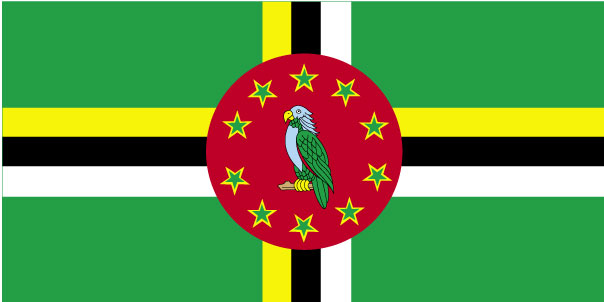
Dominica
Declare Your Relationship to Dominica
CountryReports Community
- Studying7
- From Dominica0
- Dominica heritage1
- Visited1
- Want to visit1
Customs and Culture
Customs and Culture
Cultural Attributes
Dominica's culture is a rich blend of African, Caribbean, and European influences, shaped by centuries of colonial history and the enduring presence of the indigenous Kalinago people. This small island nation in the Eastern Caribbean has cultivated a distinct identity that sets it apart from its neighbors, earning it a reputation as one of the most culturally authentic islands in the region. The Kalinago, also known as the Island Caribs, remain one of the few surviving indigenous populations in the Caribbean. Approximately 3,000 Kalinago people live in a designated territory on the island's northeastern coast, where they maintain traditional practices including basket weaving, canoe building, and the use of medicinal plants. Their territory is recognized by the Dominican government and serves as both a living community and a cultural heritage site that welcomes visitors. The majority of Dominicans are of African descent, a legacy of the transatlantic slave trade. This heritage is deeply expressed through music, food, and oral traditions. Creole, also known as Kwéyòl or Patois, is widely spoken alongside English and reflects the French colonial period that preceded British rule. Though English is the official language, Kwéyòl is used in everyday conversations, music, storytelling, and even some radio broadcasts. Carnival and the World Creole Music Festival are among the island's most celebrated cultural events. The World Creole Music Festival, held annually in October, draws performers and visitors from across the Caribbean, Africa, and North America, showcasing zouk, kompa, bouyon, and other Creole-influenced genres. Bouyon, a fast-paced fusion genre originating in Dominica, is considered the island's signature sound. Roman Catholicism is the dominant religion, practiced by roughly 60 percent of the population, though various Protestant denominations and a small Rastafari community also have a presence on the island. Religious festivals, particularly those tied to patron saints, remain important community gatherings. Dominican cuisine reflects this cultural layering, with dishes such as callaloo soup, saltfish, and mountain chicken — the local name for the giant ditch frog — occupying a central place in the national diet.

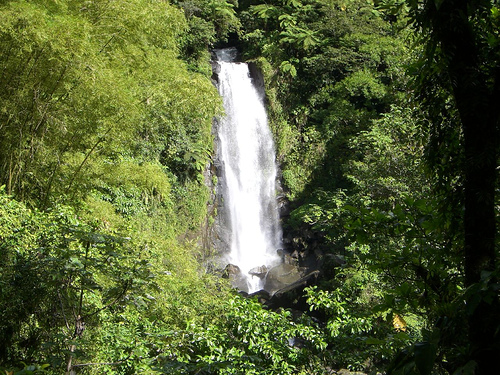
Nature's Island, Carib's Stronghold
Get More Customs and Culture
5 more cultural topics for members
Social Customs & Etiquette · Diet · Family · Dating Customs · Recreation
Every country, every topic, all activities & recipes
✓ Instant access on this device · ✓ No subscription
Holidays
Independence Day
11/3Independence Day
Dates of Interest
- November 3rd
How do people greet each other in Dominica?
A common greeting is Cakafete, meaning "how are you?", and most people speak a French dialect called Kwéyòl.
Do
- Try Kwéyòl greetings like "Bon jou" (Good Morning) or "Byenvini" (Welcome)
- Use "Sa ou fe" to ask how are you
- Say "Bon jou, Misyé" (Good day, sir)
Good to know
- Close friends, especially girls, stand close and often walk arm-in-arm around the shoulders or waist
What is the food like in Dominica?
Basic staples include fish, yams, cassava bread, and other vegetables, with many regional specialties.
Good to know
- Try ti-ti-ri, a white river fish eaten fried with garlic and lime
- Crapaud is a frog whose legs are eaten like chicken
- Regional favorites include boija (coconut cornmeal bread), funchi (cornmeal and okra pudding), and pumpkin soup
- A popular drink is a sea-moss drink made from vanilla, algae, and milk
What should I know about manners in Dominica?
Dominicans are reserved and place a high value on good manners.
Do
- Be polite and mind your manners
What should I wear in Dominica?
Dominicans wear Western-style clothing, with traditional costumes worn by women on holidays.
Good to know
- On holidays women might wear a bright jupe (skirt with lace petticoats), la wobe douilette (a wide blouse), and a madras hat called tet e case
What are families like in Dominica?
Dominicans have formal marriages, common-law relationships (couples living together), and visiting unions (partners living apart).
Good to know
- Women are the head of the household in common-law relationships and visiting unions
What do people do for fun in Dominica?
The most popular sports are cricket and football (soccer), along with volleyball and squash.
Good to know
- Men enjoy playing dominoes
Last updated: 2026-07-12 · Sources: CountryReports
Photos of Dominica
Photos of Dominica


Travel and Tourism
Travel and Tourism
- Travel Alert Status
- Level 1: Exercise Normal Precautions
- Currency
- 2.7
- Time Difference
- UTC-4 (1 hour ahead of Washington, DC, during Standard Time)
- Airports
- 2
Read the full travel guide — health, safety, vaccinations, disease risk, sanitation, and transit details.
View full travel guideRecipes
Recipes
History
History
Historical Eras
Kalinago Dominance
1200 – 1635
Kalinago (Island Carib) people established dominance over Dominica after displacing earlier Arawak inhabitants around the 14th century. Columbus sighted the island in 1493, and though Spanish ships called periodically throughout the 16th century, fierce Kalinago resistance effectively prevented any European settlement for over a century, making Dominica the last Caribbean island to be colonized.
Colonial Rivalry
1635 – 1763
France claimed Dominica in 1635, and French missionaries became the island's first permanent European inhabitants, though Kalinago pressure remained intense. In 1660, Britain and France mutually agreed to abandon the island, yet both powers continued extracting timber. Dominica's position between the French islands of Martinique and Guadeloupe ultimately gave France the upper hand, and a French settler community took root before the mid-18th century.
British Colonial Rule
1763 – 1896
The 1763 Treaty of Paris transferred Dominica to Britain, which established a legislative assembly representing only the white population. A brief French occupation during the American Revolutionary War was reversed by the 1783 Treaty of Paris. The 1831 Brown Privilege Bill extended rights to free non-whites, and after emancipation in 1834, Dominica briefly became the only British Caribbean colony with a Black-controlled legislature, though planter-class pressure steadily eroded that democratic experiment.
Crown Colony Era
1896 – 1967
Britain re-established Crown Colony government in 1896, effectively disenfranchising the majority Black population. Post–World War I political consciousness spurred the Representative Government Association, which gained legislative seats through the 1920s and 1930s. Universal adult suffrage was introduced in 1951, and after the short-lived West Indies Federation dissolved, Dominica became an associated state of the United Kingdom in 1967, assuming control of its internal affairs.
Independence & Stabilization
1967 – 1995
Full independence as the Commonwealth of Dominica was granted on November 3, 1978, though economic underdevelopment and devastating hurricanes in 1979 and 1980 immediately tested the new nation. Political turmoil led to an interim government before the 1980 elections brought Eugenia Charles and the Dominica Freedom Party to power; Charles served 15 years as the Caribbean's first female prime minister and became the defining figure of Dominica's early independent era.
Modern Dominica
1995 – present
Dominica has navigated recurring economic challenges tied to the decline of its banana industry, most dramatically illustrated when Hurricane Dean destroyed 99 percent of the banana crop in 2007. The government has pursued economic diversification through ecotourism and a citizenship-by-investment program, while also grappling with the severe destruction wrought by Hurricane Maria in 2017. The island's roughly 3,000 Kalinago remain the sole surviving pre-Columbian community in the eastern Caribbean.
Overview
The island’s indigenous Arawak people were expelled or exterminated by Caribs in the 14th century. Columbus landed there in November 1493. Spanish ships frequently landed on Dominica during the 16th century, but fierce resistance by the Caribs discouraged Spain’s efforts at settlement.
Every country, every topic, all activities & recipes
✓ Instant access on this device · ✓ No subscription
Timeline of Key Events
1493
Christopher Columbus visits the island and names it Dominica (Sunday Island).
Christopher Columbus visits the island and names it Dominica (Sunday Island).
1635
France claims Dominica.
France claims Dominica, paving the way for French missionaries to colonise the island. However, resistance by the indigenous Carib Indians continues.
1660
Britain and France agree to abandon Dominica and St Vincent.
Britain and France agree to abandon Dominica and St Vincent.
1763
Britain gains possession of Dominica in accordance with the Treaty of Paris.
Britain gains possession of Dominica in accordance with the Treaty of Paris, which ended the Seven Years’ War. However, France continues to challenge this until 1805.
1834
Slavery abolished.
Slavery abolished.
1896
Britain re-establishes crown colony government over Dominica.
Britain re-establishes crown colony government over Dominica.
1951
Britain declares universal adult suffrage established in Dominica.
Britain declares universal adult suffrage established in Dominica.
Read the full history profile — narrative overview, defining eras, and the complete timeline in one place.
View expanded historyInteresting Facts
Interesting Facts
Christopher Columbus visited the island in 1493. As he landed on a Sunday, he called the island Dominica (Sunday Island).
Dominica gained its independence in 1978.
Two years after independence Mary Eugenia Charles became the first female Prime Minister in the Caribbean.
See every fact — trivia, oddities, and curious tidbits gathered from across the country.
View all interesting factsGeography and Environment
Geography and Environment
- Terrain
- rugged mountains of volcanic origin
- Climate
- tropical; moderated by northeast trade winds; heavy rainfall
- Natural Hazards
- flash floods are a constant threat; destructive hurricanes can be expected during the late summer months
- Current Environmental Issues
- NA
Read the full geography and environment profile — terrain, climate, natural resources, hazards, land use, and international agreements.
View full geographyPeople & Demographics
People & Demographics
Religion
Languages Spoken
English (official), French patois
- English
- French
- Kwéyòl
Population
- Population
- 73,897
- Population in Major Urban Areas
- ROSEAU (capital) 14,000
- Nationality Noun
- Dominican(s)
- Ethnic Groups
- Black, mixed black and European, European, Syrian, Carib Amerindian
Education
- Literacy Definition
- Age 15 and over has ever attended school
Life Expectancy
- Life Expectancy at Birth
- Life expectancy at birth in Dominica stands at approximately 78 years overall, with women typically outliving men by several years. Female life expectancy is estimated at around 80 years, while male life expectancy falls closer to 76 years. These figures place Dominica comfortably above the regional average for many Caribbean and Latin American nations and reflect meaningful progress in public health infrastructure over recent decades. Several factors contribute to Dominica's relatively strong life expectancy. The island has maintained a functioning public healthcare system anchored by the Princess Margaret Hospital in the capital, Roseau, along with a network of rural health centers and clinics distributed across the island's parishes. Access to primary care, maternal health services, and immunization programs has helped reduce mortality across all age groups. The Dominican diet has historically leaned toward fresh produce, root vegetables, and locally caught fish, which are generally associated with positive cardiovascular and metabolic health outcomes. However, like many Caribbean nations, Dominica faces growing concerns about non-communicable diseases, including hypertension, diabetes, and obesity, which are increasingly prevalent and pose challenges to maintaining or improving current life expectancy trends. Dominica's small population, estimated at approximately 73,000 people, means that even modest shifts in disease burden or healthcare delivery can noticeably affect national statistics. The island's vulnerability to natural disasters, demonstrated dramatically by the catastrophic damage caused by Hurricane Maria in 2017, also introduces periodic stress on the healthcare system that can have downstream effects on population health outcomes. The government has pursued a long-term vision of positioning Dominica as the world's first climate-resilient nation, which includes rebuilding and strengthening health infrastructure with more durable materials and sustainable design. Investments in resilient health facilities and expanded community health services are expected to contribute to greater stability in health outcomes over the coming years, supporting continued positive trends in life expectancy. Overall, Dominica's life expectancy at birth reflects a society that has made meaningful strides in healthcare access and public health, while still navigating the pressures common to small island developing states, including climate vulnerability, constrained resources, and a rising burden of chronic disease.
- Infant Mortality Rate
- Dominica maintains a relatively low infant mortality rate compared to many other developing nations in the Caribbean and Latin America region. According to recent data, the infant mortality rate in Dominica stands at approximately 10 to 12 deaths per 1,000 live births, reflecting the country's ongoing efforts to strengthen its public health infrastructure and maternal care services. This figure represents a significant improvement over previous decades, when infant mortality rates across the Eastern Caribbean were considerably higher. The decline is largely attributed to expanded access to prenatal care, skilled birth attendants, improved nutrition programs, and immunization campaigns supported by regional and international health organizations. Dominica's healthcare system, while limited in size due to the country's small population of roughly 70,000 people, provides universal access to basic health services. The Princess Margaret Hospital in the capital Roseau serves as the primary referral facility for complex maternal and neonatal cases. Community health centers distributed across the island's districts play a critical role in reaching rural populations and monitoring infant and maternal health outcomes. Despite these positive trends, Dominica faces ongoing challenges in maintaining and improving health outcomes. The island's vulnerability to natural disasters, most notably Hurricane Maria in 2017, temporarily disrupted healthcare infrastructure and services, potentially affecting the continuity of maternal and infant care programs. Recovery efforts in the years since have focused on rebuilding health facilities to higher resilience standards. Common causes of infant mortality on the island include premature birth complications, congenital conditions, and neonatal infections — challenges shared across much of the Caribbean. Regional cooperation through the Pan American Health Organization (PAHO) and UNICEF continues to support capacity-building efforts aimed at further reducing these preventable deaths. For context, the global average infant mortality rate is approximately 27 deaths per 1,000 live births, placing Dominica well below that threshold and in a favorable position relative to many similarly sized small island developing states.
Read the full people and society profile — demographics, health, education, religion, languages, and notable people.
View full people and societyGovernment & Politics
Government & Politics
Country Identity
- Country Name
- Dominica
- Full Country Name
- Commonwealth of Dominica
Government Structure
- Government Type
- parliamentary democracy; republic within the Commonwealth
- Legal System
- based on English common law
- Executive Branch
- chief of state: President Sylvanie BURTON (since 2 October 2023) head of government: Prime Minister Roosevelt SKERRIT (since 8 January 2004); note - originally assumed post following the death of Prime Minister Pierre CHARLES cabinet: Cabinet appointed by the president on the advice of the prime minister elections: president elected by the House of Assembly for a five-year term; election last held 2 October 2023 (next to be held in 2028); prime minister appointed by the president election results: Sylvanie BURTON elected president; she became the first woman to hold the office in Dominica's history
- Legislative Branch
- Unicameral House of Assembly (32 seats; 21 members elected by popular vote in single-member constituencies, and 9 senators appointed by the president — 5 on the advice of the prime minister and 4 on the advice of the leader of the opposition; members serve five-year terms; the Speaker and Deputy Speaker, who may be elected from outside the House, account for the remaining 2 seats) Elections: Last held on 6 December 2022 (next to be held by 2027); the election must be held within five years of the previous polling date or within 90 days of the dissolution of parliament. Election results: Percent of vote by party — Dominica Labour Party (DLP) 81.97%, United Workers' Party (UWP) 17.82%; seats by party — DLP 19, UWP 2.
- Judicial Branch
- Eastern Caribbean Supreme Court, consisting of the Court of Appeal and the High Court (located in Saint Lucia; one of the six judges must reside in Dominica and preside over the Court of Summary Jurisdiction)
- Suffrage
- 18 years of age; universal
- Constitution
- 3-Nov-78
- Independence
- 3 November 1978 (from UK)
- National Holiday
- Independence Day, 3 November (1978)
Capital City
- Capital Name
- Roseau
- Capital - geographic coordinate
- 15 18 N, 61 24 W
- Capital Time Difference
- UTC-4 (1 hour ahead of Washington, DC, during Standard Time)
The name is French for "reed"; the first settlement was named after the river reeds that grew in the area
Military
Branches: No regular military forces; Commonwealth of Dominica Police Force (includes Coast Guard)
Embassy / Diplomatic Mission
U.S. Embassy in Bridgetown
Wildey Business park
Wildey
St. Michael, Barbados
Telephone: (246) 227-4399
Emergency after-hours telephone: (246) 227-4000
Facsimile: (246) 431-0179
Email: BridgetownACS@state.gov
Hours of operation are 8:30 a.m. – 4:30 p.m. Monday through Friday, except Barbadian and U.S. holidays.
Read the full government profile — flag symbolism, national anthem, and other national symbols.
View full government detailsEconomy
Economy
Dominica's economy depends heavily on agriculture, tourism, and to a lesser extent, offshore financial services and citizenship-by-investment programs.
Snapshot
- Currency Name and Code
- East Caribbean dollars (XCD)
- GDP Real Growth Rate
- 4.7%
Every country, every topic, all activities & recipes
✓ Instant access on this device · ✓ No subscription
News & Weather
News & Weather
Current Weather
Latest News
Dominica PM raises US visa restrictions in talks with Washington - Caribbean National Weekly
Caribbean National Weekly · 3d ago
Dominica Cottone Obituary Oct 12, 2026 - Bond Funeral Home
Bond Funeral Home · 14d ago
Dominica PM holds bilateral talks with US on visa issue - Jamaica Gleaner
Jamaica Gleaner · 3d ago
The Caribbean’s “Nature Island” Is Also Its Next Farm-to-Table Destination - AFAR
AFAR · 10d ago
I Never Liked the Caribbean—But This Island With Waterfalls, Hot Springs, and Rainforests Won Me Over - Travel + Leisure
Travel + Leisure · 36d ago
Dominica vs. Cayman Isl (Nov 17, 2026) Live Score - ESPN
ESPN · 13d ago
Student research paper wins first place at regional SWAAG conference - Wynne Progress
Wynne Progress · 5d ago
Jessie Woo calls Dominica a ‘Magical Land’ during festival visit - Dominica News Online
Dominica News Online · 2h ago
News via Google News
Videos
Videos
1 curated YouTube videos.
Source: YouTube
Frequently Asked Questions
Frequently Asked Questions
What is the population of Dominica?
What is the capital of Dominica?
Where is Dominica located?
What are Dominica's ocean and sea borders?
What is the predominant religion in Dominica?
What currency is used in Dominica?
What language is spoken in Dominica?
What is Dominica's geography and terrain like?
What is Dominica known for?
Last reviewed 2026